

“How long will my filler last?” sounds like a simple question. The honest answer, however, is a range rather than a promise. Many hyaluronic acid fillers remain noticeable for several months, while some products and treatment areas may hold a visible effect for a year or longer. That does not mean every client will follow the same timeline. The product selected, where it is placed, how much movement occurs in the area, the treatment goal, your anatomy and your previous filler history can all affect what you see over time. At Classy Cosmetic Clinic, this is why a consultation for dermal fillers in Thornhill and Newmarket does not begin with choosing the product that claims the longest duration. It begins with understanding the face, the concern and the type of change that would still look balanced months later.
Filler Longevity Is a Gradual Timeline, Not an Expiry Date
Dermal filler does not normally look unchanged one day and disappear the next. The visible effect tends to soften gradually. A client may first notice that the treated area feels less defined, that movement has returned to its usual appearance, or that the original concern is becoming visible again. This distinction matters because “still present” and “still giving the result I want” are not necessarily the same thing. A small amount of product may remain even when the cosmetic effect looks less obvious. On the other hand, early swelling can temporarily make a new treatment look fuller than the settled result. Measuring longevity from the first mirror check can therefore create an unrealistic expectation. A useful timeline has three stages:
- Early recovery: swelling, tenderness or bruising may temporarily affect the appearance.
- Settled result: the area can be assessed more meaningfully after the early changes have eased.
- Gradual softening: the visible effect changes over time rather than reaching a universal expiry date.
The exact timing of each stage varies. Your provider should explain what is expected for the specific product and area being treated.

What Actually Affects How Long Dermal Filler Lasts?
Online estimates often reduce filler longevity to one number. In practice, several variables work together.
1. The Filler Category and Formulation
“Dermal filler” is a broad category, not one identical substance. Many facial fillers are made with hyaluronic acid, but their formulations are not interchangeable. Products can differ in firmness, flexibility, concentration, particle or gel characteristics, and the areas for which they are authorized or selected. A flexible product chosen for a mobile area may behave differently from a firmer product used to support facial structure. That does not make one universally better. The appropriate choice depends on the tissue, movement and goal. Biostimulatory injectables also should not be folded into the same timeline as conventional hyaluronic acid filler. Sculptra in Thornhill and Newmarket, for example, is planned around gradual collagen support rather than immediate gel-based volume. Comparing the two only by asking which “lasts longer” overlooks how differently they are used.
2. The Treatment Area and Facial Movement
Areas that move frequently during speaking, smiling, eating or facial expression may not retain the same visible effect as less mobile areas. The lips are the clearest example: they are constantly moving and have different tissue characteristics from the cheeks or chin. That is one reason a lip result may soften sooner than a structural result elsewhere. Still, movement is not a stopwatch. Two people who receive treatment in the same area can notice different timelines because product choice, anatomy and treatment plan also matter.
3. The Amount, Depth and Placement of Product
Longevity is not simply a matter of using more filler. Product placed too superficially, in the wrong tissue plane or without regard for facial proportions can create problems without creating a better or longer-lasting result. Depth and placement are clinical decisions. A conservative plan may deliberately use a smaller amount and prioritize natural movement. Another plan may stage treatment across more than one appointment so the result can be reassessed before anything is added. The goal is not to make filler last at any cost; it is to use an appropriate plan for the face.
4. Anatomy, Tissue Quality and the Original Concern
Bone structure, fat distribution, skin thickness, tissue support and facial asymmetry all affect how a filler result reads visually. A subtle contour adjustment in a well-supported area is different from trying to compensate for broader volume loss or skin laxity. The concern itself matters too. Restoring a small amount of lip definition, supporting a chin profile and softening an under-eye hollow are not versions of the same treatment. They involve different anatomy, different risks and different standards for what looks natural.
5. Previous Treatment History and Individual Response
If you have had filler before, the date of the last appointment is only part of the history. A provider may also need to know the product used, the area treated, the amount, how the area changed and whether you experienced persistent swelling, lumps or another concern. Individual response varies as well. This is why a friend’s timeline—and even your own experience in a different area—cannot predict an exact duration for your next treatment.
Why Filler Can Seem to Last Differently by Area
General patterns can help set expectations, but they should not be treated as guarantees.
Lips
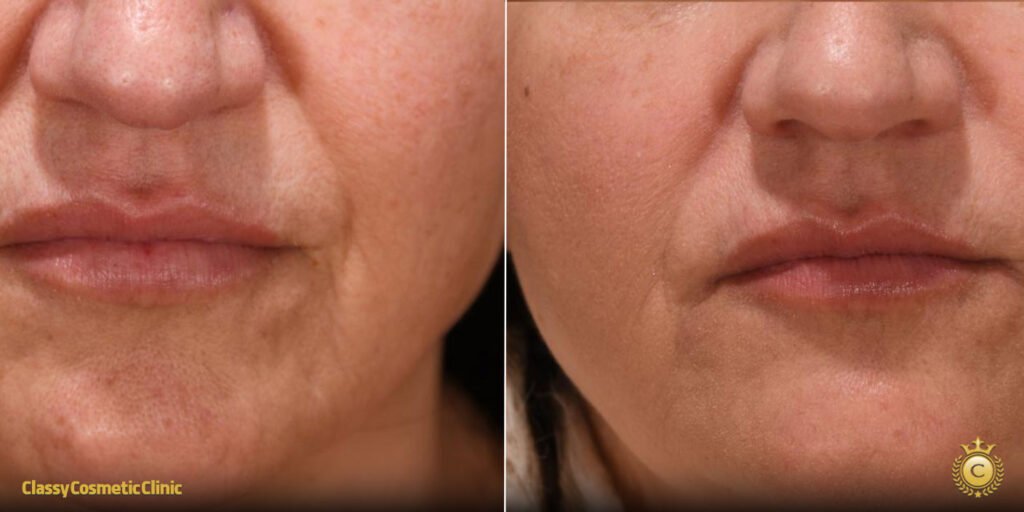
Lip filler may be used to refine shape, border definition, symmetry or soft volume. Because the lips move constantly, a visible result may soften sooner than a result in a less mobile structural area. The right maintenance plan should reflect how the lips look and move, not a standing appointment made months in advance. Learn more about the clinic’s conservative approach to lip filler in Thornhill and Newmarket.
Cheeks and Mid-Face
Cheek filler may be considered for selected clients when the goal is to support contour or visible volume loss. The mid-face is often discussed as a structural area, but duration still depends on the formulation, placement, amount and anatomy. Skin laxity or a concern caused by something other than volume loss may also require a different plan.
Chin and Jawline
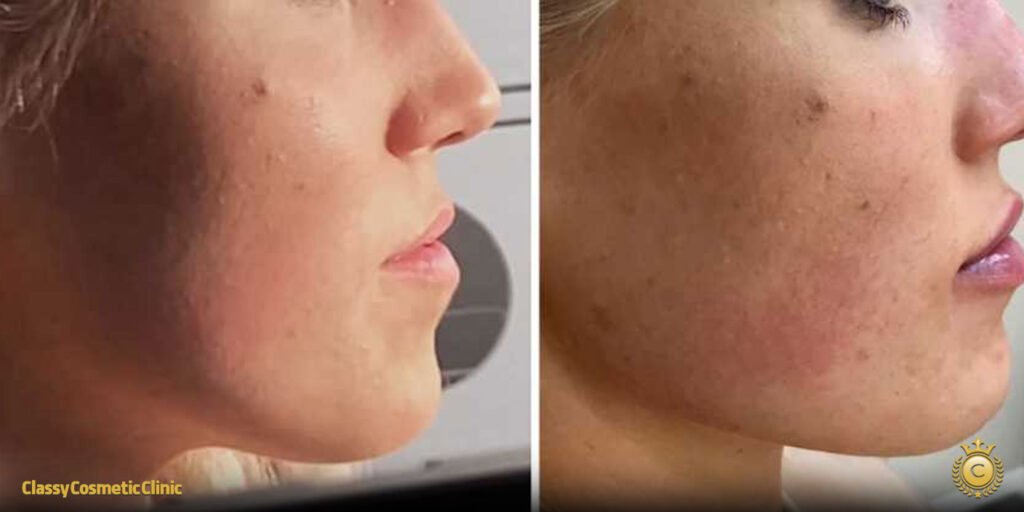
Chin or jawline treatment is often planned around proportion rather than isolated size. A firmer formulation may be considered when suitable, but the longest-lasting option is not automatically the best one. Facial movement, soft-tissue support and how the profile relates to the rest of the face all influence the decision.
Under-Eyes
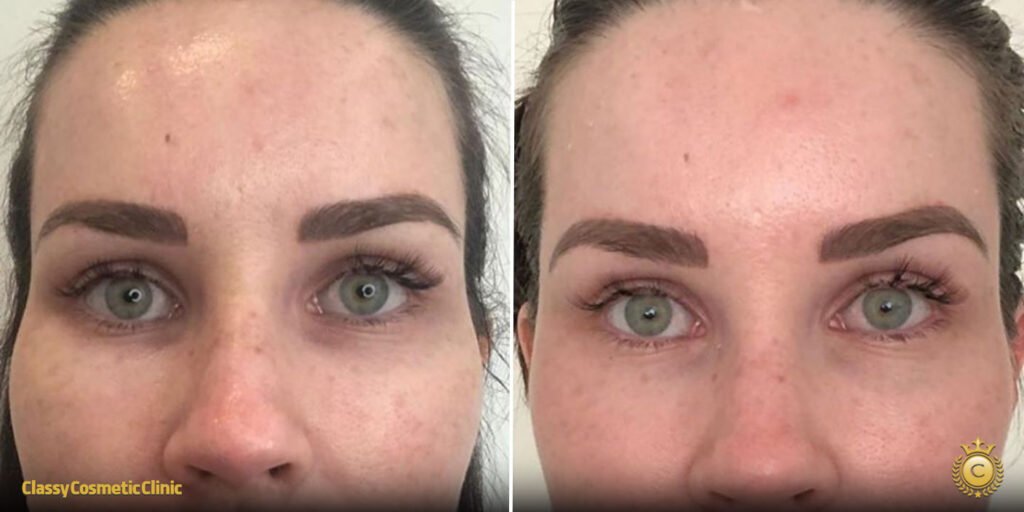
The under-eye area requires especially cautious assessment. Hollowness, pigmentation, puffiness, fluid retention and loose skin can all create a tired appearance, but filler is not appropriate for every cause. Product can also remain visible or contribute to heaviness in an unsuitable case. Our under-eye filler consultation is therefore based on candidacy first, not on selling a duration claim.
Product Study Duration Is Not a Personal Guarantee
You may see a manufacturer, clinic or social post quote a precise number of months. That figure may come from a product study, a regulatory indication or a clinic’s general experience. It can be useful context, but it is not a personalized prediction. Study results are based on a defined product, treatment area, method, follow-up schedule and group of participants. Your own treatment may differ in anatomy, objective, amount, placement or previous history. Even the way “improvement” is measured in a study may not match the point at which you personally feel ready for reassessment. A more useful consultation question is: What range is reasonable for this product, in this area, for my goal—and what changes should prompt a follow-up? That question creates room for informed planning without turning an estimate into a guarantee.
Can Skincare, Water or Supplements Make Filler Last Longer?
Healthy routines can support general skin health, but no skincare product, supplement, special diet or water target can guarantee that filler will last longer. Claims that one habit will dramatically preserve an injectable result should be treated cautiously. Good aftercare still matters. Follow the instructions provided for your treatment, avoid manipulating the area unless specifically directed, and contact the clinic if something does not feel or look as expected. What matters is safe recovery and appropriate follow-up—not trying to “lock in” filler through an unproven hack. Sun protection, sleep, hydration and not smoking are reasonable health habits. They should not be marketed as a formula that controls how quickly a specific filler is broken down.
When Should You Consider a Maintenance Appointment?
There is no universal rule that filler must be topped up at six months, nine months or one year. A maintenance conversation makes sense when the initial result has settled, the area has changed enough to reassess, and you still want treatment after reviewing the benefits and risks. Before adding more product, the provider should consider:
- How the area looks at rest and in motion
- Whether previous filler may still be contributing to the shape
- Whether swelling, asymmetry, migration or another concern is present
- Whether the original goal is still appropriate
- Whether adding filler, waiting, dissolving selected hyaluronic acid filler, or choosing another approach deserves discussion
Automatic top-ups can encourage people to treat the calendar instead of the face. That can gradually move a result away from the subtle look they originally wanted. Assessment and restraint matter more than repeatedly adding volume.
Why the Longest-Lasting Filler Is Not Always the Best Choice
Duration is only one part of a good treatment decision. A product also needs to suit the area, desired movement, tissue characteristics and level of correction. In a delicate or highly expressive area, flexibility and precision may matter more than choosing the firmest or longest-lasting option. Longer duration can also mean living longer with an outcome you do not like or with a complication that is difficult to correct. The FDA notes that removing or reducing filler may require additional interventions and that some materials are difficult or impossible to remove. This is another reason to favour authorized products, qualified assessment and conservative decision-making. The best plan is not the one that wins a longevity contest. It is the one that fits the anatomy, goal and risk profile while preserving natural facial expression.

Normal Fading Versus a Change That Needs Attention
Gradual loss of definition is different from a possible adverse reaction. Temporary swelling, bruising, redness or tenderness can occur after filler, and many early reactions improve over days to weeks. Health Canada also lists reported reactions such as nodules, infection, skin discolouration, allergic reaction and improper placement; some complications can last longer or require treatment.
Important: Although unintended injection into a blood vessel is uncommon, it can cause serious harm. Unusual pain, a white, grey or blue appearance of the skin near the injection site, a vision change, or signs of a stroke during or shortly after treatment require immediate medical attention. Delayed swelling, a persistent lump, heat, drainage or increasing redness should also be reported promptly rather than treated through social-media advice.
This information is not meant to make filler sound alarming. It is meant to put the question of duration in the right context: the quality and safety of the plan matter more than a promised number of months.
Planning Dermal Filler in Thornhill or Newmarket
For clients visiting our Thornhill clinic near Yonge Street, a longevity discussion is part of the consultation—not a sales claim. We review the area you want to address, previous injectable history, facial movement and what you consider a worthwhile result. If filler is not the right match for the concern, that should be explained before treatment. Classy Cosmetic Clinic also sees clients at its Newmarket location. The same assessment-first approach applies at both clinics: conservative planning, realistic expectations and treatment choices guided by anatomy rather than trends. If you are considering filler for the first time, bring questions and, if possible, details of any previous injectable treatments. If you are returning for maintenance, avoid assuming that the same amount or product must be repeated. The face and the treatment goal can change. To discuss a personalized plan, contact Classy Cosmetic Clinic for a consultation in Thornhill or Newmarket. An in-person assessment is the appropriate place to discuss the expected range for a specific product and area.
Thornhill
7163 Yonge Street Suite 269
Thornhill, Ontario L3T 0C6
Newmarket
16775 Yonge Street Suite 217
Newmarket, Ontario L3Y 8J1
2 Responses
I really delighted to find this website on bing, just what I was searching for : D too saved to fav.