Scalp Health & Early Hair Thinning Support
A Consultation-First Approach to Hair Thinning Concerns
Noticing changes in your hair can feel personal. It may begin with more shedding in the shower, a wider-looking part, reduced density around the crown, or a scalp that appears more visible under certain lighting. For many people, the concern is not sudden baldness, but a gradual change in hair thickness, fullness, and confidence.
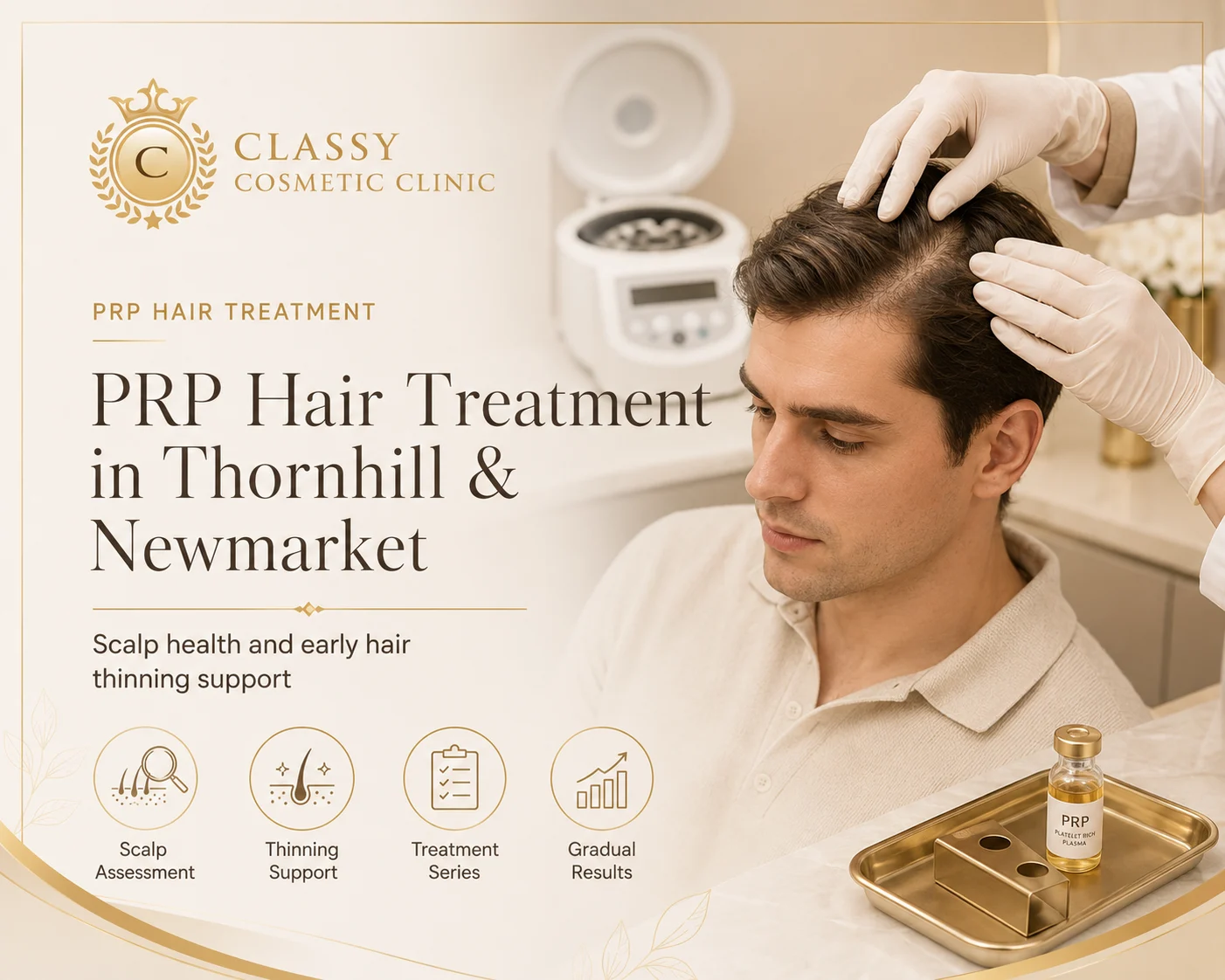
At Classy Cosmetic Clinic, PRP Hair Treatment is approached with care, discretion, and realistic guidance. Serving clients in both Thornhill and Newmarket, our focus is on scalp assessment, early to moderate hair thinning support, and treatment planning that respects your individual hair pattern, health history, and expectations.
PRP Hair Treatment may help support scalp and hair quality in selected clients, especially when thinning is still in an early or moderate stage. It is not a guaranteed hair growth solution, and it does not replace medical diagnosis, prescription treatment, or hair transplant surgery when those options are more appropriate. Instead, PRP can be considered as part of a supportive, non-surgical approach for people who want to take action early and maintain healthier-looking hair over time.
What PRP Hair Treatment is
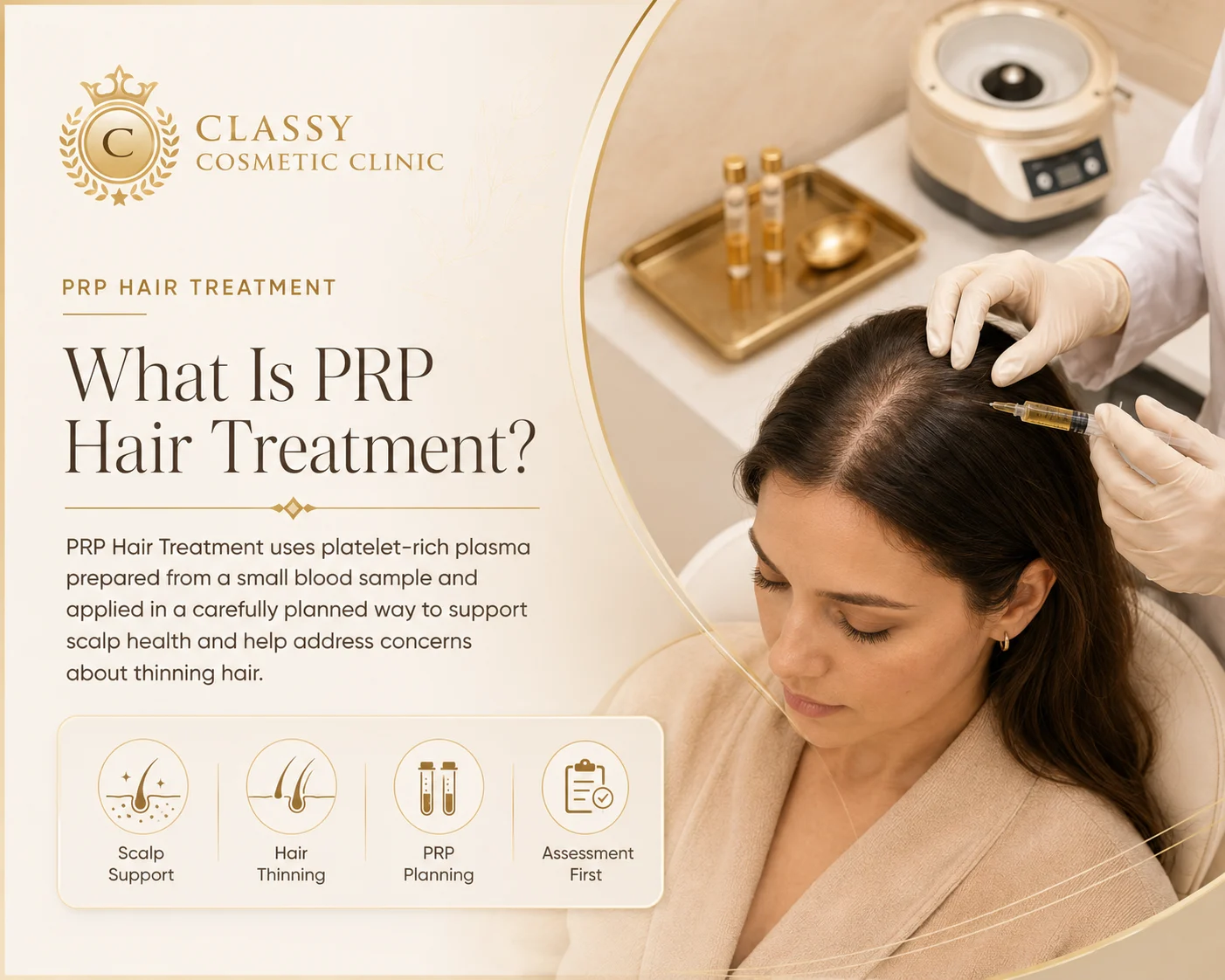
PRP stands for platelet-rich plasma. It is prepared from a small sample of your own blood. During treatment, blood is drawn and processed in a centrifuge to separate the platelet-rich plasma from other blood components. This plasma contains platelets and growth-factor-rich components that may help support tissue repair and cellular signaling.
For PRP Hair Treatment, the prepared plasma is placed into targeted areas of the scalp, usually where thinning or reduced density is visible. The goal is to support the scalp environment and existing follicles in a way that may contribute to healthier-looking hair over time.
Because PRP is prepared from your own blood, it is different from synthetic fillers, facial injectables, or topical cosmetic products. It is not used to add facial volume or smooth wrinkles. It is also not a medication that guarantees regrowth. PRP Hair works gradually, and the response depends on factors such as the cause of thinning, follicle activity, overall health, age, hormones, consistency of treatment, and maintenance.
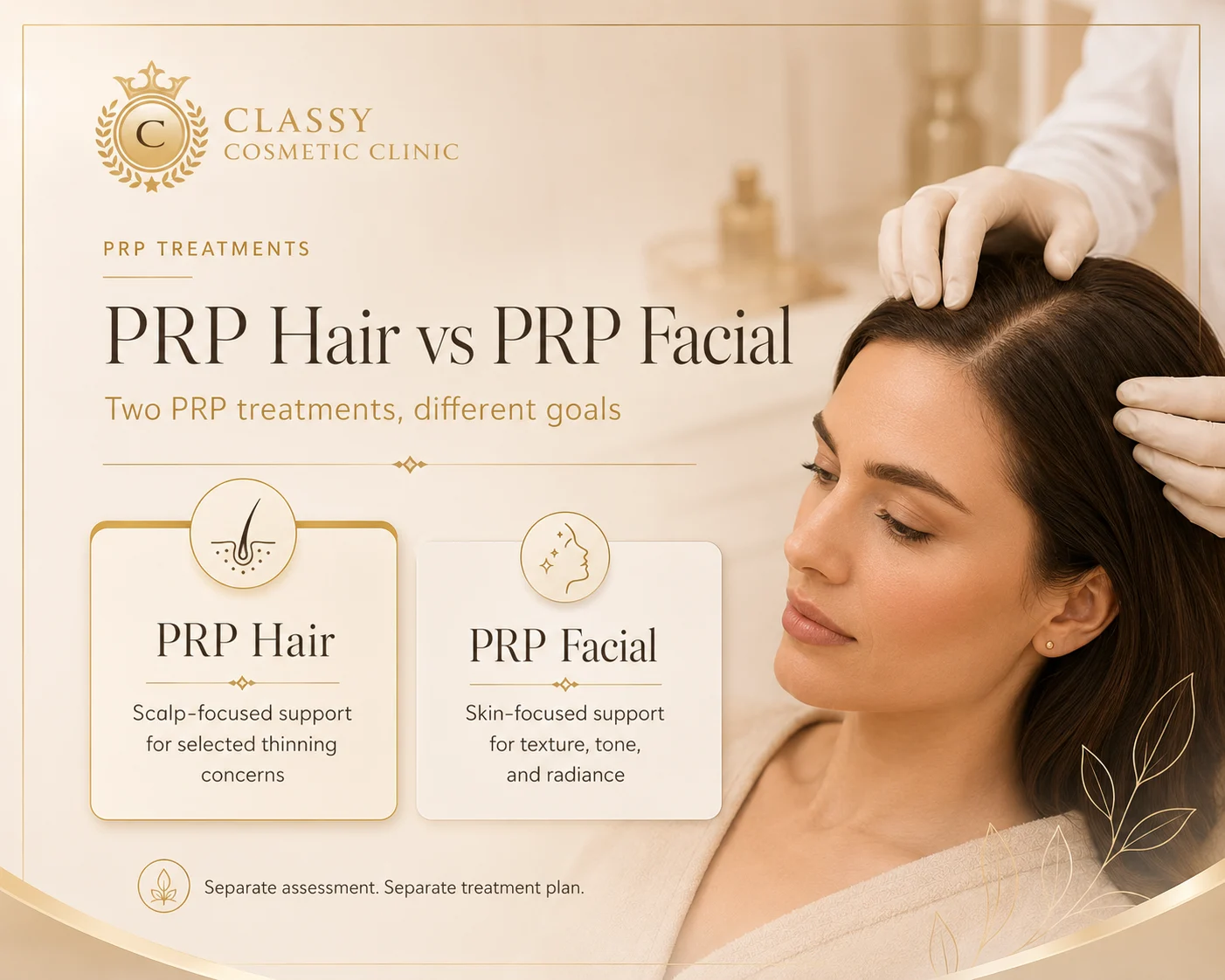
How PRP Hair Is Different from PRP Facial
PRP Hair Treatment and PRP Facial both use platelet-rich plasma, but they are not the same service and should not be presented as one combined treatment.
A PRP Facial is focused on facial skin quality. It may support texture, tone, radiance, and collagen production in the face, often through microneedling-assisted application or carefully placed micro-injections.
PRP Hair Treatment is focused on the scalp. The goal is to support areas where hair density appears reduced, where shedding has become noticeable, or where follicles may still be active but underperforming. The treatment area, technique, expectations, and timeline are different from PRP Facial.
For this reason, PRP Hair requires its own consultation and treatment plan. A client interested in skin quality may be better suited for PRP Facial, while a client concerned about thinning hair, reduced scalp coverage, or lower hair density may be assessed for PRP Hair Treatment.
Who May Consider PRP Hair Treatment
PRP Hair Treatment may be considered by adults who are noticing early or moderate hair thinning and want a supportive, non-surgical option. It may be suitable for selected clients who still have active hair follicles in the treatment area and are comfortable with gradual results.
Who May Be a Suitable Candidate
You may consider PRP Hair Treatment if you are noticing:
- A wider-looking part
- Reduced density around the crown
- More scalp visibility under light
- Increased shedding over time
- Thinner-feeling hair strands
- Early hairline or temple thinning
- Reduced fullness after stress, illness, hormonal shifts, or postpartum changes
- A desire to support scalp and hair quality before thinning becomes more advanced
Suitability depends on consultation. PRP Hair Treatment may not be the right option for every type of hair loss. During consultation, your provider will review your concerns, scalp condition, health history, and expectations before recommending whether PRP may be appropriate.
Who May Not Be Suitable
PRP Hair Treatment is not suitable for everyone. Treatment may need to be postponed or avoided if you:
- Are pregnant or breastfeeding
- Have an active scalp infection or open wound
- Have certain blood or platelet disorders
- Have severe anemia or uncontrolled medical conditions
- Are taking medications that may affect bleeding or clotting
- Have advanced hair loss with inactive follicles
- Have scarring hair loss or certain scalp conditions
- Expect guaranteed or instant hair regrowth
- Are looking for a complete solution for baldness
During consultation, your health history and scalp condition will be reviewed. If PRP Hair Treatment is not suitable, your provider may recommend another approach or suggest medical evaluation.
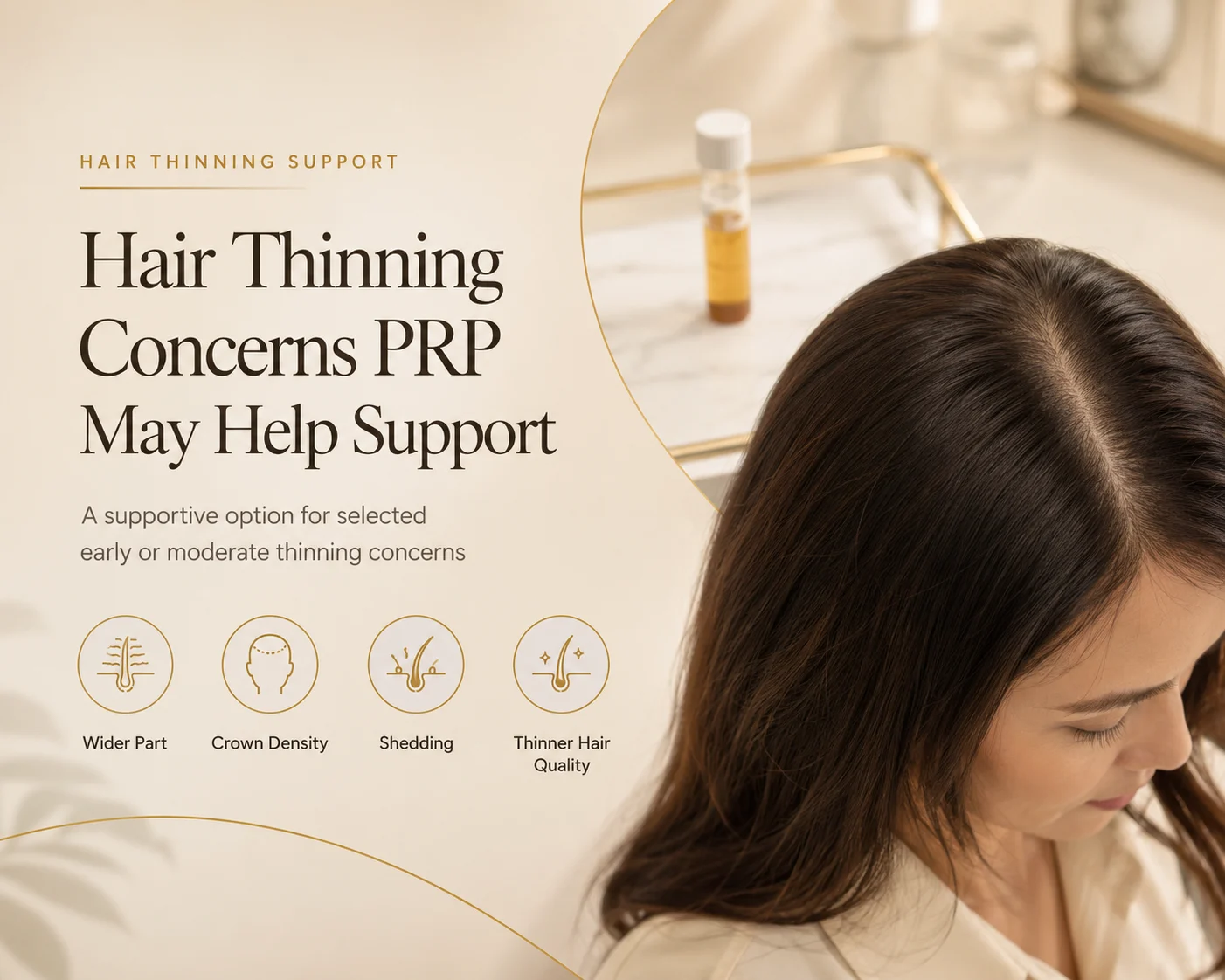
Hair Thinning Concerns PRP May Help Support
Hair thinning can appear in different ways. Some people notice shedding, while others notice reduced density or finer hair texture. PRP Hair Treatment may help support selected cases where follicles are still present and the goal is to improve scalp support and overall hair quality.
1. Early Thinning
Early thinning often appears as a subtle decrease in density. You may still have hair in the area, but it looks less full than before. PRP may be considered when follicles are still active and the goal is supportive care rather than replacement.
2. Diffuse Shedding
Some clients experience shedding across the scalp rather than in one defined area. This can be linked to stress, hormonal shifts, illness, nutrition, medication changes, or other factors. PRP may support scalp health in selected cases, but the underlying cause should be discussed during consultation.
3. Reduced Hair Density
Hair density refers to how many hairs are present in a given area. If density has gradually declined, PRP may be considered as part of a treatment series to support the scalp and encourage healthier-looking hair.
4. Thinner Hair Quality
Some clients feel their hair has become finer, weaker, or less resilient. PRP may help support the scalp environment, but improvements vary and depend on the individual response.
5. Maintenance After Previous Hair Improvement
Some clients explore PRP as part of ongoing maintenance after noticing improvement from other hair-support strategies. In these cases, PRP may be discussed as part of a long-term plan, not as a one-time solution.
Hair Shedding, Thinning, and Advanced Hair Loss Are Not the Same!
One important part of a proper PRP Hair consultation is understanding what type of concern you are experiencing. Hair shedding, thinning, and advanced hair loss are often grouped together, but they are not the same.
- Hair shedding means more hairs are falling out than usual. This can happen after stress, illness, postpartum changes, medication changes, or nutritional changes. In many cases, shedding may be temporary, but it still needs proper review.
- Hair thinning means the hair appears less dense or the strands become finer over time. This may be related to genetics, hormones, age, scalp condition, or other factors. PRP may be considered more often in this stage if follicles are still active.
- Advanced hair loss means there may be areas where follicles are no longer active or where scalp visibility is more significant. In these cases, PRP may have limited value and other options may be more appropriate.
This distinction matters because PRP Hair Treatment is most commonly considered for early thinning or selected density concerns, not complete baldness or permanent follicle loss.
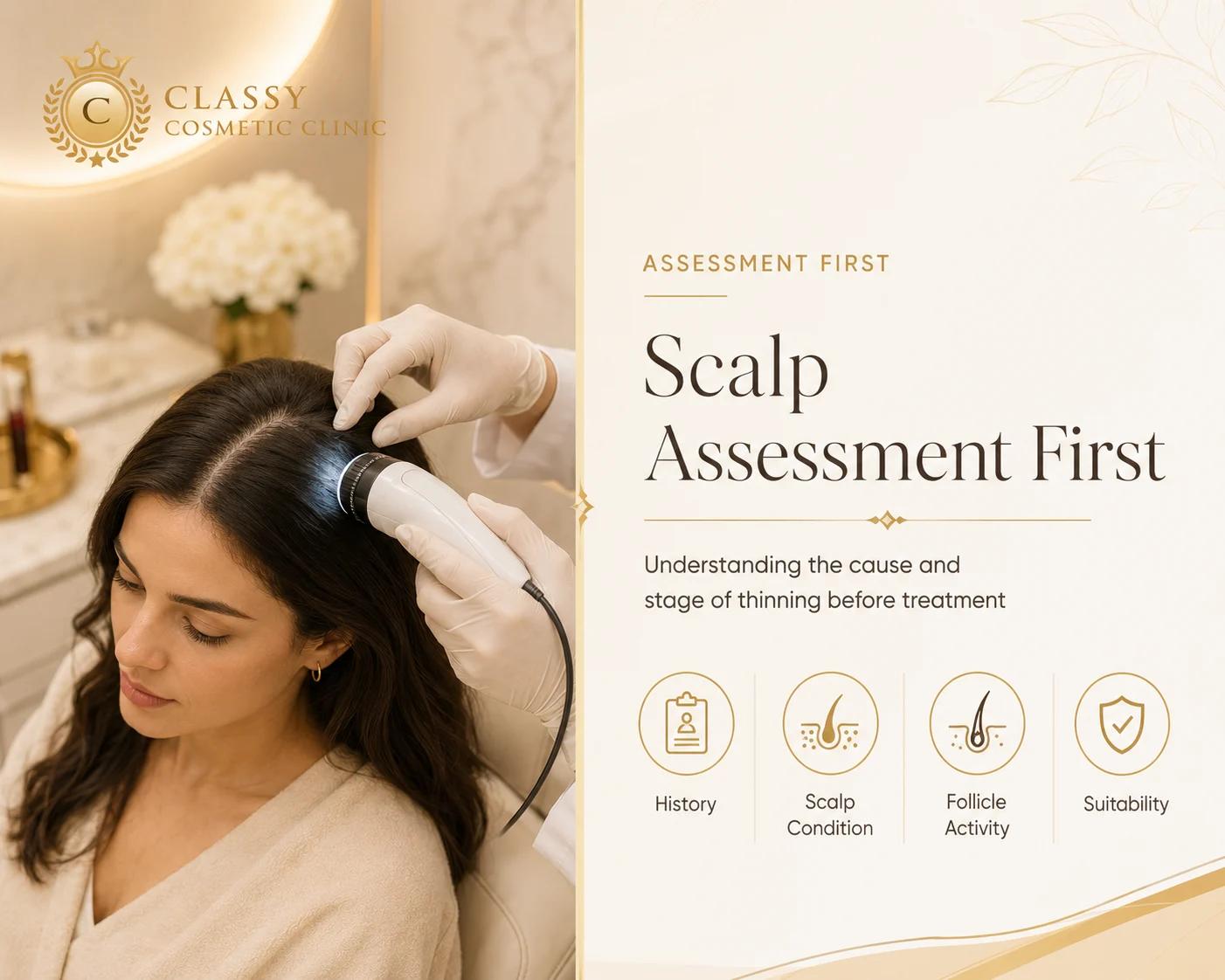
Why Scalp Assessment Matters Before Treatment
PRP Hair Treatment should begin with a careful scalp and hair assessment. Hair thinning can have many causes, and the right plan depends on understanding what may be contributing to the change
During consultation, your provider may review:
- When the thinning or shedding started
- Whether the change is sudden or gradual
- Family history of hair thinning
- Pregnancy, postpartum, or hormonal changes
- Stress, illness, or major life changes
- Nutrition and recent weight changes
- Medications or supplements
- Scalp irritation, dandruff, inflammation, or sensitivity
- Previous hair treatments or procedures
- Your expectations and comfort level
In some cases, medical testing or a physician evaluation may be recommended before treatment, especially if the hair change is sudden, severe, patchy, or associated with other symptoms. PRP can support selected clients, but it should not replace proper medical evaluation when needed.
A consultation-first approach helps protect the client from unnecessary treatment and helps set expectations clearly before beginning a series.
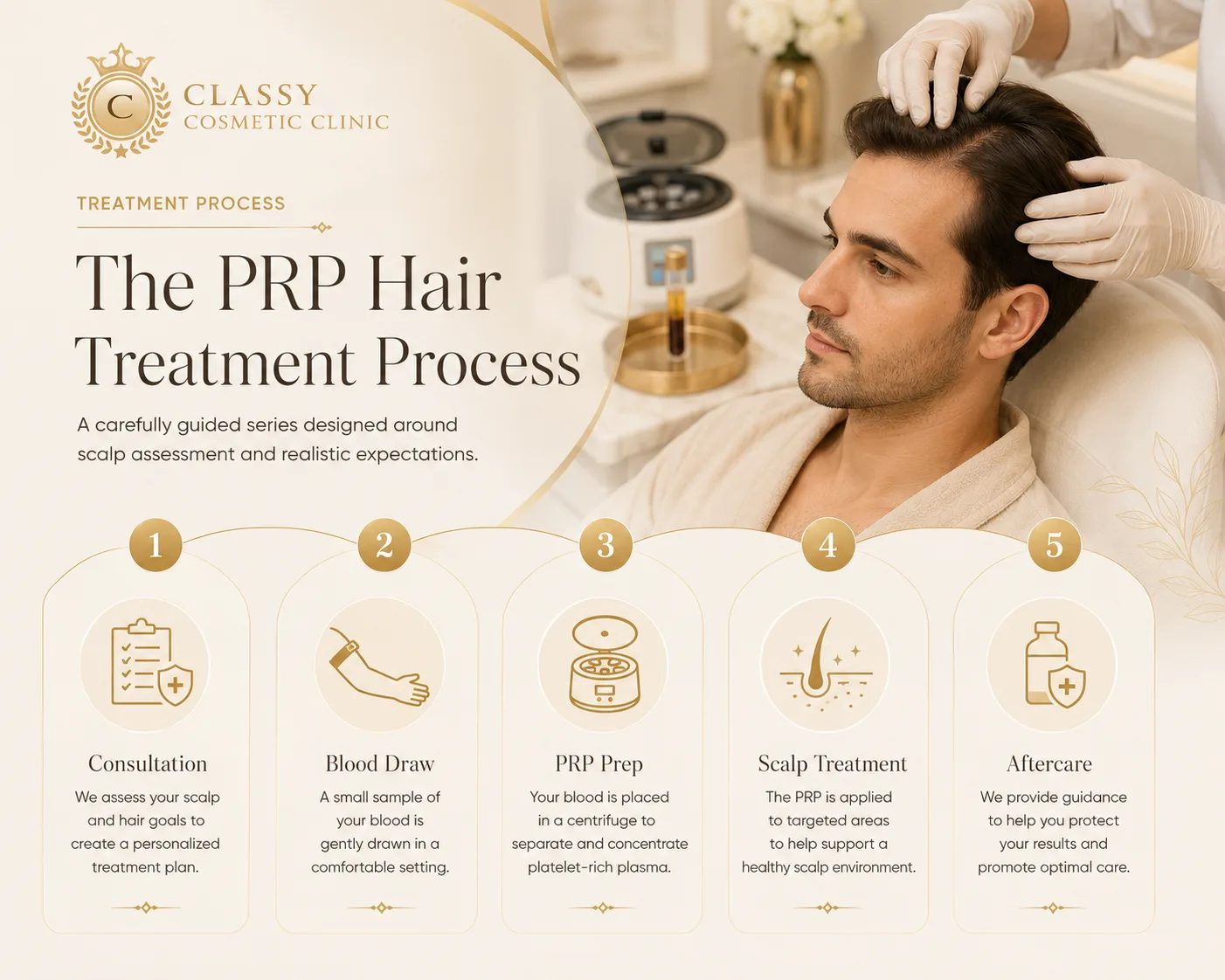
The PRP Hair Treatment Process
PRP Hair Treatment is usually planned as a series rather than a single session. The process is structured, but still personalized based on your scalp condition, comfort level, and goals.
1. Consultation
The first step is a consultation at Classy Cosmetic Clinic in Thornhill or Newmarket. Your provider will discuss your hair concerns, assess your scalp, review your health history, and explain whether PRP Hair Treatment may be suitable. This is also when your treatment plan, session frequency, expected timeline, and maintenance approach are discussed. If PRP is not appropriate, your provider may recommend another option or suggest that you speak with a physician or specialist.
2. Blood Draw
If treatment is appropriate and you decide to proceed, a small amount of blood is drawn from your arm. This step is similar to a routine blood test and is used to prepare your platelet-rich plasma.
3. PRP Preparation
The blood sample is placed into a centrifuge. This separates the blood components and allows the platelet-rich plasma to be collected. The prepared PRP is then used for scalp application.
4. Scalp Application / Injection
The PRP is placed into targeted areas of the scalp using small injections or a technique selected by the provider. The treatment is focused on areas where thinning or reduced density is visible and where the follicles may still be active. The scalp may feel sensitive during treatment. Comfort measures may be discussed depending on your needs and the technique used.
5. Aftercare
After treatment, your provider will review aftercare instructions. You may be advised to avoid washing your hair for a short period, avoid intense exercise, avoid heat exposure, and avoid applying strong hair products immediately after the session. Mild tenderness, redness, or sensitivity can occur and usually improves within a short period. Aftercare may vary depending on your scalp condition and treatment plan.
6. Treatment Series
PRP Hair Treatment typically requires a series of sessions. One session alone is usually not enough to assess meaningful improvement. A series allows the scalp to receive consistent support over time and gives the provider the opportunity to monitor response.
What to Expect During and After Treatment
During treatment, you may feel small pinches, pressure, or scalp sensitivity. The sensation varies depending on the treatment area, needle technique, and individual sensitivity. Most clients find the experience manageable, but comfort expectations should be discussed before treatment.
After the session, the scalp may feel tender, tight, or slightly swollen. Some clients notice mild redness where the PRP was placed. These effects are usually temporary. You can typically return to regular daily activities soon after treatment, although some people prefer to keep the rest of the day quiet.
You may be advised to:
- Avoid washing the scalp for the recommended time
- Avoid heavy exercise for 24 hours
- Avoid saunas, hot yoga, or excessive heat shortly after treatment
- Avoid hair dye, chemical treatments, or harsh scalp products for a short period
- Avoid anti-inflammatory medications unless approved by your healthcare provider
- Follow the clinic’s aftercare instructions carefully
Because PRP works gradually, you should not expect instant visible change after one session. The treatment is intended to support the scalp over time.
Results Timeline and Realistic Expectations
PRP Hair Treatment is gradual. Hair growth cycles are slow, and visible changes take time. Some clients may first notice reduced shedding, while others may notice improved hair texture or a subtle change in density over a longer period.
A general timeline may look like this:
| First few days | Mild scalp sensitivity may occur |
| First few weeks | No major visible change is expected |
| After several sessions | Some clients may notice less shedding or improved hair quality |
| Three to six months | Gradual changes in density or coverage may become more noticeable for selected clients |
| Six months and beyond | Maintenance may be discussed depending on the response |
PRP Hair Treatment works best when expectations are realistic and when the underlying cause of thinning has been properly reviewed. It may help support the scalp and existing follicles in selected clients, but it is not a cure for hair loss or a permanent solution for balding.
How Many Sessions May Be Needed
The number of sessions depends on your hair concerns, scalp condition, stage of thinning, and response to treatment. Many clients begin with an initial series.
A common plan may include:
- Three to four sessions
- Sessions spaced several weeks apart
- Follow-up assessment after the initial series
- Maintenance sessions if the response is positive
Some clients may need more sessions, while others may not be suitable to continue if the response is limited. Your provider will monitor progress and discuss whether additional treatment makes sense.
Consistency matters. PRP Hair Treatment is not usually planned as a one-time appointment. The goal is to support the scalp gradually over time.
Maintenance and Follow-Up
Maintenance is an important part of PRP Hair planning. Hair thinning can be ongoing, especially when genetics, hormones, stress, or age are contributing factors. Even if PRP helps support scalp and hair quality, maintenance may be needed to help sustain the appearance of improvement.
- Maintenance may include:
- Periodic PRP sessions
- Follow-up scalp assessments
- Review of hair shedding patterns
- Discussion of home hair care routines
- Referral for medical review if changes are sudden or significant
- Consideration of complementary treatments when appropriate
The goal is to create a long-term plan that is realistic and manageable. Maintenance should be based on response, not pressure. If PRP is not producing meaningful support, that should be discussed honestly.
PRP Hair Treatment in Thornhill and Newmarket
Classy Cosmetic Clinic offers PRP Hair Treatment consultations at both our Thornhill and Newmarket locations.
Clients looking for PRP Hair Treatment in Thornhill can visit our Yonge Street clinic, which serves Thornhill, North York, Richmond Hill, Vaughan, Markham, and surrounding areas. Clients looking for PRP Hair Treatment in Newmarket can access care at our Newmarket clinic, serving Newmarket, Aurora, East Gwillimbury, Bradford, and York Region.
Whether you are booking a hair thinning consultation in Thornhill or Newmarket, the focus remains the same: careful scalp assessment, realistic expectations, and a treatment plan based on suitability.
At Classy Cosmetic Clinic, we take time to understand your concerns and explain whether PRP Hair Treatment for selected thinning concerns may be appropriate for your stage of thinning.
Why Choose a Consultation-First Approach at Classy Cosmetic Clinic
Hair concerns can feel sensitive, and clients deserve more than a rushed recommendation. At Classy Cosmetic Clinic, our consultation-first approach is built around listening, assessment, and honest guidance.
We do not present PRP Hair Treatment as a miracle solution. We explain what it may support, what it cannot do, and why consistency matters. This helps clients make informed decisions and feel comfortable with the process.
Our approach includes:
- Careful scalp and hair assessment
- Review of health history and potential contributing factors
- Realistic discussion of timelines and treatment response
- Conservative, medically careful treatment planning
- Honest guidance if PRP is not the right option
- Follow-up and maintenance planning when appropriate
The goal is to support scalp and hair quality in a calm, professional, and respectful environment. Whether you visit our Thornhill or Newmarket location, you can expect a careful approach that prioritizes suitability over pressure.
Faq
1. What is PRP Hair Treatment?
PRP Hair Treatment uses platelet-rich plasma prepared from a small sample of your own blood. The PRP is placed into targeted areas of the scalp to help support scalp health and hair quality in selected clients.
2. Is PRP Hair Treatment the same as PRP Facial?
No. PRP Facial focuses on facial skin quality, glow, texture, and collagen support. PRP Hair Treatment focuses on the scalp and may help support selected hair thinning concerns.
3. Does PRP Hair guarantee hair growth?
No. PRP Hair Treatment does not guarantee hair growth and should not be presented as a cure for hair loss. It may help support scalp and hair quality in selected clients, but results vary.
4. Who is a good candidate for PRP Hair Treatment?
PRP Hair may be suitable for adults with early or moderate thinning, reduced density, or increased shedding where follicles may still be active. Suitability depends on consultation and scalp assessment.
5. Can PRP Hair help advanced baldness?
PRP is usually less suitable for advanced baldness or areas where follicles are no longer active. In those cases, other options may be more appropriate.
6. How many PRP Hair sessions are needed?
Many clients begin with a series of sessions spaced several weeks apart. The exact number depends on the scalp condition, degree of thinning, and individual response.
7. When will I see results?
Results are gradual. Some clients may notice reduced shedding or improved hair quality after several sessions. Density changes, when they occur, may take several months.
8. Is there downtime after PRP Hair Treatment?
Downtime is usually limited. Mild tenderness, redness, or scalp sensitivity may occur. You may be advised to avoid washing your hair, intense exercise, heat exposure, or harsh hair products for a short time.
9. Is PRP Hair Treatment painful?
You may feel small pinches, pressure, or scalp sensitivity during treatment. Comfort varies by person, and your provider can discuss comfort measures during your visit.
10. Can PRP Hair be combined with other treatments?
PRP Hair may be discussed alongside other supportive options depending on your scalp assessment and goals. If another concern is identified, your provider may recommend medical review, home care adjustments, or a separate treatment plan.
11. Do you offer PRP Hair Treatment in Thornhill?
Yes. PRP Hair Treatment consultations are available at Classy Cosmetic Clinic in Thornhill at 7163 Yonge Street Suite 269, Thornhill, Ontario L3T 0C6.
12. Do you offer PRP Hair Treatment in Newmarket?
Yes. PRP Hair Treatment consultations are available at Classy Cosmetic Clinic in Newmarket at 16775 Yonge Street Suite 217, Newmarket, Ontario L3Y 8J.
Ready to Discuss PRP Hair Treatment?
If you are noticing early hair thinning, increased shedding, or changes in hair density, a consultation can help you understand whether PRP Hair Treatment may be suitable for you.
Classy Cosmetic Clinic provides PRP Hair Treatment consultations in both Thornhill and Newmarket with a calm, assessment-first approach.
- Thornhill: 7163 Yonge Street Suite 269, Thornhill, Ontario L3T 0C6
- Newmarket: 16775 Yonge Street Suite 217, Newmarket, Ontario L3Y 8J