

Botox and Dysport are often discussed as if one is the “stronger,” “faster” or “more natural” option. That framing is appealing because it turns a clinical decision into a simple product contest. It is also incomplete. Both are prescription botulinum toxin type A products used to temporarily reduce targeted muscle activity. They are not identical, their units cannot be directly compared, and their authorized cosmetic uses in Canada are not worded exactly the same. Yet the name on the vial is only one part of the outcome. Facial anatomy, muscle strength, placement, dose, treatment goal and the practitioner’s product-specific experience all matter. At Classy Cosmetic Clinic, a consultation for Botox and wrinkle-relaxing treatments in Thornhill and Newmarket begins with facial movement—not with declaring one brand the winner. This guide explains the differences that should shape the conversation and corrects several comparisons that sound useful but can lead clients in the wrong direction.
Are Dysport and Botox the Same?
No. Botox Cosmetic contains onabotulinumtoxinA, while Dysport Aesthetic contains abobotulinumtoxinA. Both belong to the same treatment category and both work by temporarily reducing nerve signalling to selected muscles. When those muscles contract less strongly, dynamic expression lines may appear softer. That shared mechanism does not make the products interchangeable. Each has its own formulation, manufacturing process, potency assay, product monograph, preparation instructions and dosing system. A treatment plan written in Botox Cosmetic units cannot simply be copied into Dysport Aesthetic units. The practical answer is therefore:
- Same category and general mechanism: yes.
- Same product, unit scale or dosing instructions: no.
- Guaranteed to look different on every person: no.
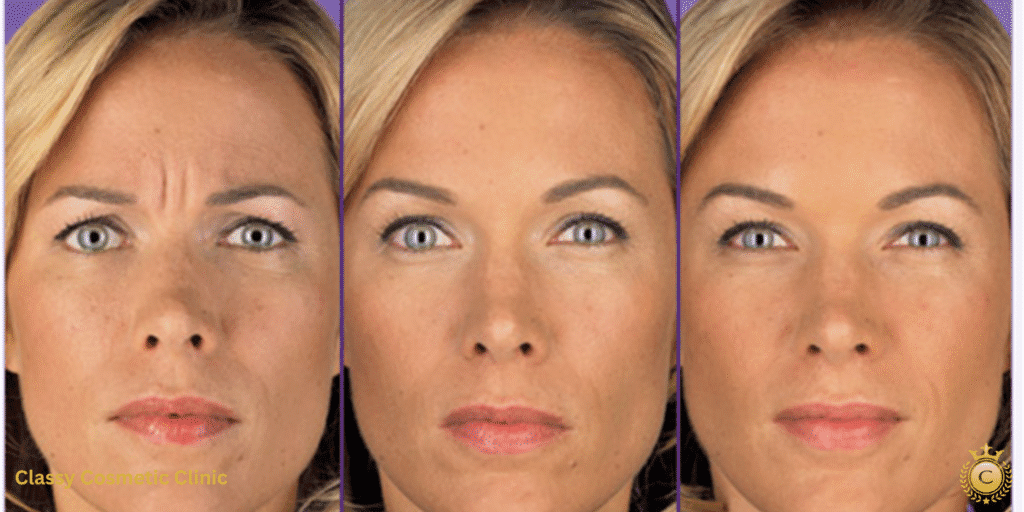
Dysport vs Botox at a Glance
| Comparison Point | Botox Cosmetic | Dysport Aesthetic | What It Means for Clients |
|---|---|---|---|
| Active ingredient | OnabotulinumtoxinA | AbobotulinumtoxinA | Both are botulinum toxin type A products, but they are distinct preparations. |
| Units | Allergan Units | Dysport Aesthetic Units | Units are product-specific and cannot be directly converted or compared. |
| Cosmetic indications in the Canadian monographs reviewed | Upper facial lines, including forehead, crow’s feet and frown lines; also platysma prominence in adults | Moderate-to-severe frown lines and/or crow’s feet in adults under 65 | The authorized use depends on the exact product and current monograph. |
| Onset | Develops over time rather than immediately | The monograph reports a median onset of three days in a glabellar-line study | A study-specific onset is not a promise for an individual or proof that one brand always wins. |
| Duration | Temporary; varies by person, area and plan | Temporary; varies by person, area and plan | Neither product has one guaranteed duration for every client. |
| Best choice | Determined by assessment | Determined by assessment | Anatomy, goals, history and provider experience matter more than a generic brand ranking. |
What Botox and Dysport Have in Common
Both products are neuromodulators. They are used in small, targeted amounts to temporarily reduce the activity of specific muscles rather than to add volume. This makes them fundamentally different from dermal fillers, which are used for selected volume, contour or structural concerns. For cosmetic treatment, neuromodulators are commonly discussed when lines are driven by repeated expression—such as frowning, squinting or raising the brows. A line that remains visible when the face is completely relaxed may involve a combination of long-term movement, skin quality and other structural changes. Reducing muscle activity may soften it, but it may not erase it. Both Botox Cosmetic and Dysport Aesthetic:
- Produce temporary rather than permanent effects
- Require product-specific storage, preparation and administration
- Can cause local reactions such as discomfort, bruising, swelling or headache
- May cause unwanted weakness in a nearby muscle if the treatment affects an unintended area
- Carry warnings about the possible distant spread of toxin effect
- Should be selected only after medical history, medications and treatment suitability are reviewed
The similarities are substantial. That is why technique and clinical judgment cannot be separated from the brand comparison.
Difference 1: Botox and Dysport Units Are Not Equivalent
This is the most important difference for anyone comparing quotes. The word “unit” sounds universal, but it is not. A Botox Cosmetic unit is defined through the manufacturer’s assay for that product. A Dysport Aesthetic unit is defined through a different product-specific assay. Both Canadian product monographs state that their units are not interchangeable with other botulinum toxin preparations. That means a higher number of Dysport units does not automatically mean a stronger treatment, a larger dose in everyday terms or a worse value. It also means that comparing the advertised cost per unit across brands can be misleading unless you understand the full treatment plan. When comparing options, ask for clarity on:
- The exact brand being offered
- The treatment area and objective
- Whether the quote covers the planned treatment or only states a unit price
- The provider’s approach to follow-up
- Whether the recommendation is based on your muscle pattern rather than a standard package
The meaningful comparison is the appropriateness and total plan for the intended result—not the raw number printed beside “units.”
Difference 2: Authorized Cosmetic Uses Are Product-Specific
Botox and Dysport are frequently used as category names in everyday conversation, but regulatory authorization applies to a specific product for specific indications. In the Canadian product monographs reviewed for this article, Botox Cosmetic is indicated for upper facial lines—including forehead, lateral canthal and glabellar lines—and for improvement in the appearance of platysma prominence in adults. Dysport Aesthetic is indicated for temporary improvement in moderate-to-severe glabellar lines and/or lateral canthal lines in adults under 65. These details matter because “neuromodulator treatment” is not one blanket authorization for every line, muscle or cosmetic goal. Product monographs can also change. A consultation should use the current Canadian information for the product being considered rather than relying on a social-media list of possible injection areas.
Difference 3: Onset Claims Need Context
Dysport is often marketed as the faster option. There is a factual basis for saying that Dysport Aesthetic may begin to show an effect relatively early: its Canadian monograph reports that onset was observed as soon as 24 hours in a glabellar-line study, with a median time of three days. What that does not prove is that every Dysport client will see a result in one day, or that Dysport will always act faster than Botox for the same person. Separate product trials are not the same as a direct, head-to-head comparison under identical conditions. Trial design, treatment area, dose, response definition and assessment schedule can differ. The practical expectation for either product is that results develop—not that the final outcome is visible while leaving the appointment. Early changes may appear within days, while the effect can continue to evolve afterward. A product should not be judged or topped up prematurely just because the face still moves on the first few days. If timing matters because of a wedding, photographs, travel or another event, discuss it in advance. Neither product should be scheduled at the last minute based on an onset slogan.
Difference 4: Neither Brand Has a Guaranteed Duration Advantage
Botox and Dysport are temporary. Many clients experience visible softening for roughly three to four months, but the effect does not end on a fixed day. Movement usually returns gradually. Duration can vary with:
- The muscle and area treated
- Muscle strength and expression habits
- The product-specific dose and placement
- Previous response to treatment
- Individual biology
- Whether the treatment goal is light softening or a stronger reduction in movement
Claims that one brand universally lasts longer are not reliable enough to guide every client. One person may prefer the way a product develops or wears off; another may see little meaningful difference. Your own documented response over time is more useful than a generic online ranking. Maintenance should also be based on reassessment. The Canadian monographs reviewed state that injection intervals should not be more frequent than every three months. More frequent treatment, higher dosing or “topping up” without evaluation should not be treated as a shortcut to better longevity.
Does Dysport “Spread More” Than Botox?
You may have heard that Dysport spreads widely while Botox stays exactly where it is placed. This is too absolute to be a useful rule. The products have different formulations and are prepared according to different instructions. However, the clinical area affected is not determined by the brand name alone. Dose, concentration, injected volume, injection depth, placement, muscle anatomy and technique can all influence the treatment pattern. More spread is not automatically a benefit, and less spread is not automatically safer or more precise. The desired effect depends on which muscle is being treated and which nearby muscles should continue to function normally. A broad forehead, for example, still requires careful assessment of brow position and the way different parts of the frontalis muscle contribute to expression. The better question is: How will this product be prepared and placed for my anatomy and desired level of movement?
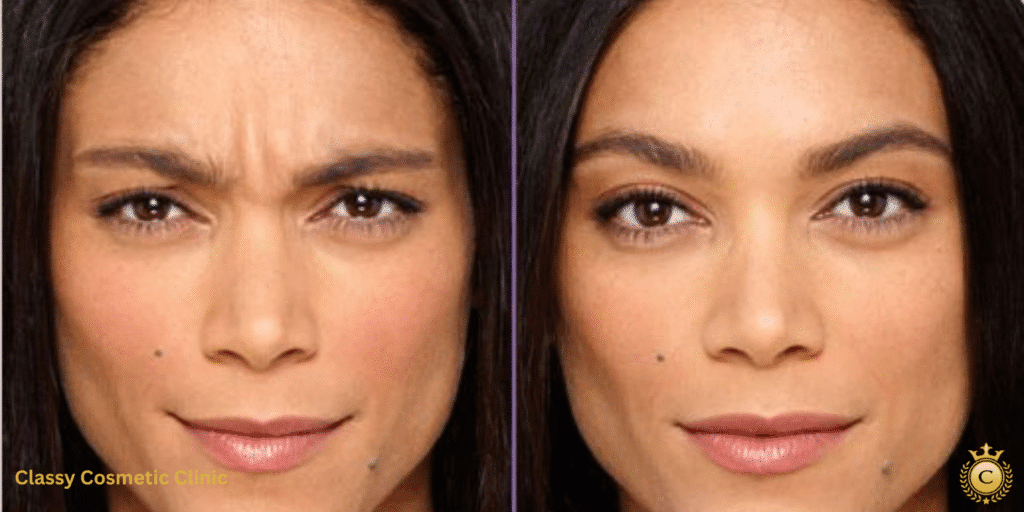
Which Option Looks More Natural?
Neither Botox nor Dysport owns the “natural-looking” result. Natural expression depends primarily on the treatment plan. A face can look overtreated when too much movement is reduced, when linked muscle groups are not considered together, or when a standard pattern is used without observing how the individual raises the brows, frowns and smiles. It can also look unbalanced if one area is treated without considering its effect on another. A conservative plan may aim to soften a line while preserving some movement. For one client, that may involve a lighter first treatment and later reassessment. For another, stronger muscles may require a different plan. Product selection can contribute, but placement and dose are what translate the product into a facial result.
How a Provider Should Choose Between Botox and Dysport
A useful decision is based on several inputs rather than a favourite brand.
Your Treatment Area and the Current Product Monograph
The first question is whether the product is appropriate for the intended area and whether the proposed use aligns with current Canadian guidance. The exact concern should be identified before discussing units.
Your Facial Movement and Resting Anatomy
The provider should observe the face at rest and during expression. Brow position, eyelid position, asymmetry, muscle strength and compensatory movement can all affect planning. A forehead should not be treated as a flat surface with identical points for every client.
Your Preferred Degree of Movement
Some clients want very light softening; others prefer a stronger reduction in a particular expression line. Neither preference should be assumed. A clear conversation about movement is more actionable than simply requesting a brand.
Your Previous Experience
If one product previously produced a result you liked, lasted for a reasonable period and caused no unexpected issue, that history is relevant. If the result felt heavy, uneven, too weak or shorter than expected, the provider should determine whether the likely cause was product selection, dosing, placement, anatomy, timing or expectations.
Your Health History and Medications
Tell the provider about previous botulinum toxin treatments, allergies, neuromuscular conditions, swallowing or breathing problems, eye issues, pregnancy or breastfeeding, infection near the proposed sites, and all medications and supplements. Product-specific contraindications also differ; for example, the Dysport Aesthetic monograph includes known allergy to cow’s milk protein.
Can You Switch from Botox to Dysport—or Back?
Switching may be considered, but it should not be handled by copying the last unit number into a different brand. The provider needs to know what product you received, when it was administered, which areas were treated, the dose if available, and how the result developed. A switch can be reasonable when the preferred product is unavailable, when a client and provider want to evaluate a different response, or when the treatment plan changes. It is not evidence that the previous product “stopped working” without further assessment. A shorter-than-expected result can have several explanations, including dose, muscle strength, placement, expectations or the fact that early movement is not the same as complete loss of effect. Do not alternate brands casually or receive overlapping treatments from different clinics without disclosing the full history. The provider needs an accurate timeline to plan safely.
What First-Time Clients Should Prioritize
For a first treatment, brand familiarity can feel reassuring, but these questions are more important:
- What facial movement is creating the concern?
- Is a neuromodulator appropriate for that concern?
- What product is being recommended, and why?
- How much movement does the plan aim to preserve?
- What side effects and urgent warning signs should you know?
- When should the result be assessed?
- What is the plan if the result is lighter, stronger or less even than expected?
If the concern is caused mainly by volume loss rather than muscle movement, a neuromodulator may not be the correct category. This is why a consultation should diagnose the visual cause before discussing Botox versus Dysport.
Safety Considerations for Both Products
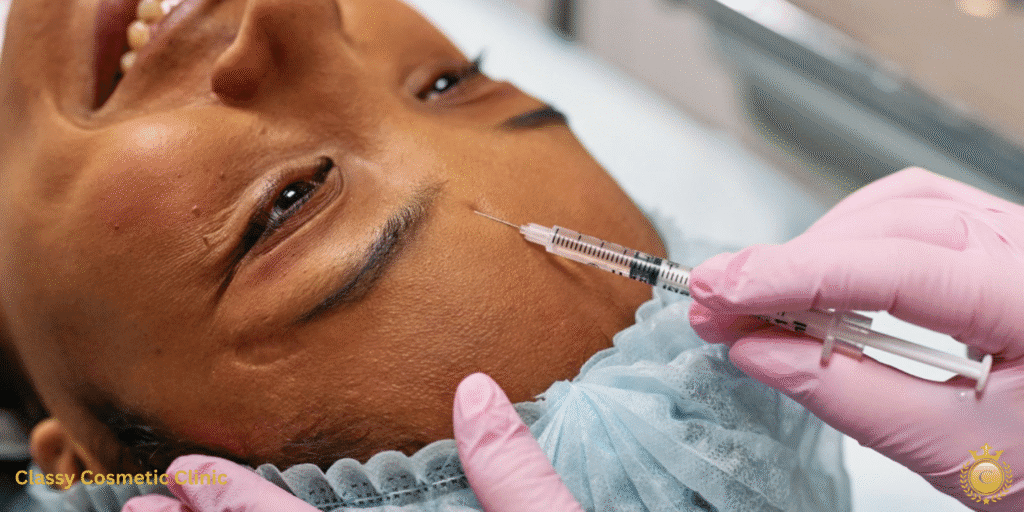
Temporary injection-site discomfort, redness, swelling, bruising or headache may occur. Depending on the area, unintended muscle weakness can lead to effects such as eyelid or brow drooping, asymmetry, dry eye or changes in expression. The exact risks differ by product and treatment area and should be reviewed before treatment.
Important: Botulinum toxin products also carry a serious warning about possible spread of toxin effect beyond the injection area. Symptoms may appear hours to weeks after treatment and can include generalized weakness, double or blurred vision, drooping eyelids, difficulty speaking or swallowing, or breathing difficulty. Trouble swallowing, speaking or breathing requires immediate medical attention.
This is a prescription treatment. Product authenticity, current Canadian authorization, appropriate storage and preparation, accurate medical history, and care by a properly qualified professional are part of the safety decision—not optional details.
Dysport and Botox Consultations in Thornhill and Newmarket
At our Thornhill clinic, the consultation focuses on what your face does in motion, which lines concern you, and how much movement you want to retain. The objective is a measured plan rather than a default number of units or an automatic brand choice. Classy Cosmetic Clinic also welcomes clients at its Newmarket location. The same assessment-first approach applies at both locations: the product, dose and placement should follow the individual—not a trend or a one-size-fits-all injection map. If you are deciding between Botox and Dysport, bring any available details from previous treatments and explain what you liked or disliked about the result. To discuss suitability and the current options offered by the clinic, contact Classy Cosmetic Clinic for an appointment in Thornhill or Newmarket.
Thornhill
7163 Yonge Street Suite 269
Thornhill, Ontario L3T 0C6
Newmarket
16775 Yonge Street Suite 217
Newmarket, Ontario L3Y 8J1