
PRP Facial vs PRP Hair Treatment: Different Goals for Skin and Scalp Support
People often hear “PRP” and assume it refers to one treatment with one set of benefits. In practice, that is where confusion usually begins. PRP Facial Treatment and PRP Hair Treatment may start with the same platelet-rich plasma process, but they are not the same service, they do not target the same concerns, and they should not be explained as if they do the same job. At Classy Cosmetic Clinic in Thornhill and Newmarket, a clearer distinction helps clients understand whether they are looking for support with skin quality or support with scalp and hair concerns.
In simple terms, PRP involves drawing a small amount of your blood, processing it to concentrate the platelets, and then applying or injecting that platelet-rich portion in a treatment area. Dermatology sources describe this as a blood-based procedure used in different settings, including aesthetic skin treatments and hair-loss care. The starting material may be the same, but the treatment plan changes depending on whether the focus is the face or the scalp.
The confusion often starts with the name
Online, PRP Facial is still sometimes grouped under older terms such as “vampire facial.” Classy’s current public PRP page is still indexed as PRP and Vampire Facial Treatment, which helps explain why many readers assume PRP for skin and PRP for hair are part of one combined treatment menu. For an updated, premium, medical-safe article, it is better to use PRP Facial when discussing skin-focused care and PRP Hair Treatment when discussing scalp-focused care. Clear naming supports clearer expectations.
When the goal is skin quality
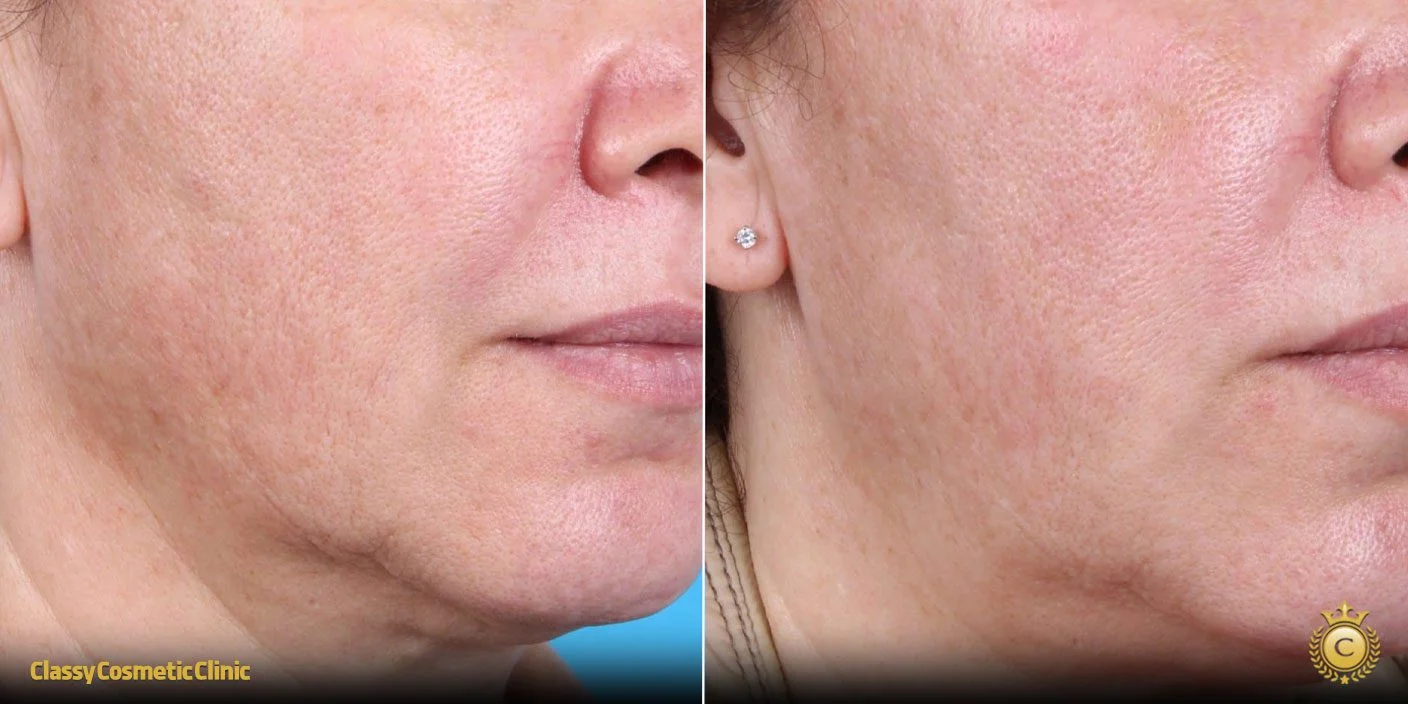
A PRP Facial is best explained as a skin-quality treatment, not a dramatic transformation treatment. On Classy’s public PRP service snippet, the skin-focused message is about collagen support, texture, and tone. That aligns with a careful, consultation-first description: PRP Facial may help support smoother-looking texture, fresher-looking skin, and overall skin quality, depending on assessment and the condition being treated.
This is exactly where careful wording matters. A 2024 umbrella review of systematic reviews found that PRP for facial rejuvenation is increasingly used, but the evidence base remains limited and heterogeneous. Many of the underlying studies were uncontrolled, confidence in most reviews was low or critically low, and the authors concluded that the available evidence is insufficient for firm conclusions about PRP, whether alone or combined with other treatments, for facial rejuvenation. That does not mean PRP Facial has no place in aesthetic care. It means the treatment should be presented as a measured option that may support skin quality goals rather than as a proven shortcut to flawless skin.
For clients thinking specifically about dullness, uneven-looking texture, or a tired overall skin appearance, PRP Facial can make sense as part of a broader conversation about skin quality. In some treatment plans, microneedling may also be discussed because PRP can be delivered by injection or alongside microneedling, and Classy already offers a microneedling service aimed at texture, fine lines, and hydration support. Whether that combination is suitable depends on your skin goals, treatment tolerance, timing, and professional assessment.
When the goal shifts to the scalp
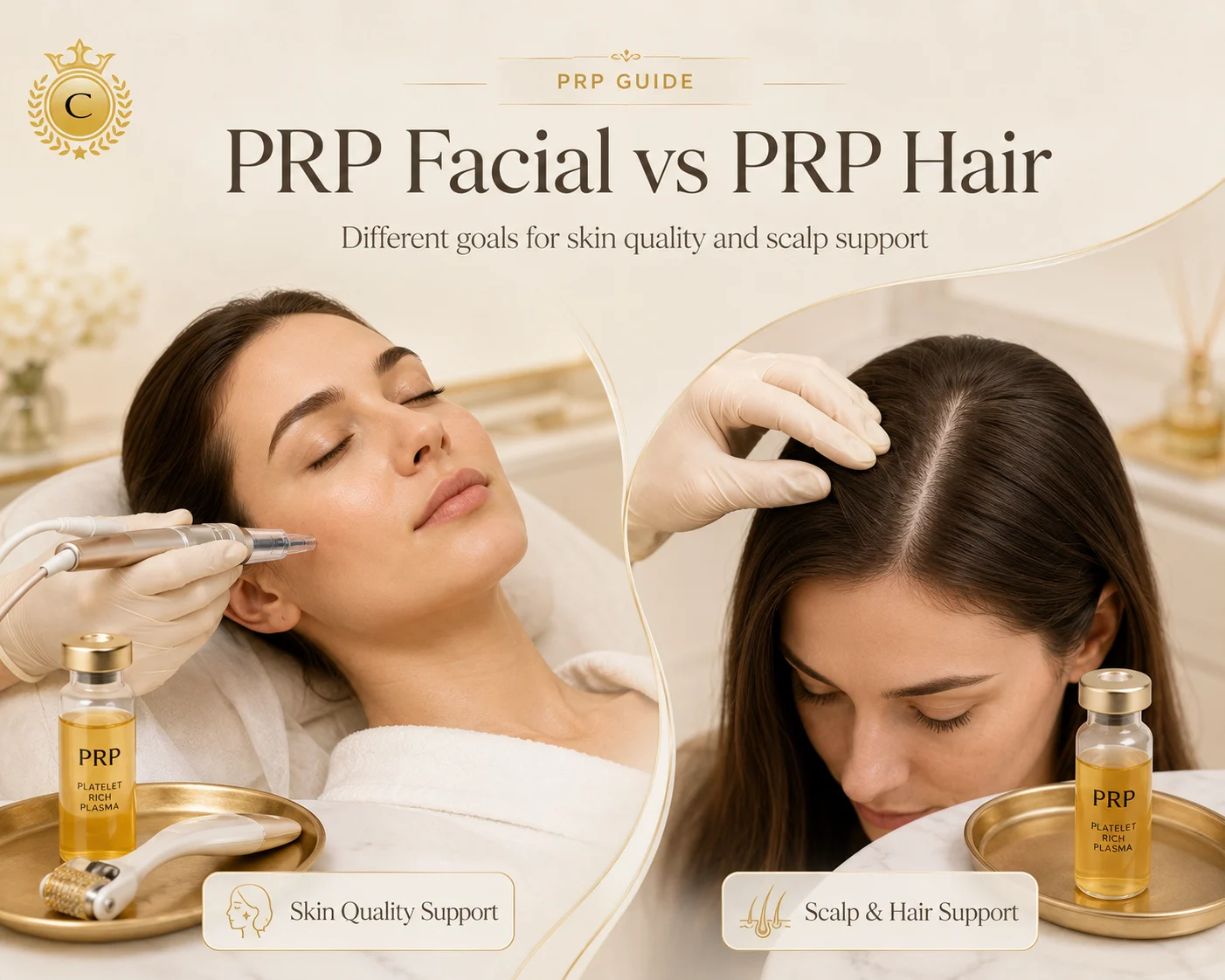
PRP Hair Treatment is a different conversation. Here, the focus is not facial glow or skin freshness. The focus is the scalp, the pattern of thinning, and whether PRP may be appropriate as part of a support plan for early or moderate hair thinning. Public-facing patient guidance from the American Academy of Dermatology and recent meta-analytic evidence both point toward PRP being discussed most often in patterned hair loss settings, with the literature showing improvements in hair density in some androgenetic alopecia studies, while results for other outcomes are less consistent.
That distinction is important because “hair loss” is not one single diagnosis. The AAD notes that different types of hair loss require different treatments, which is why scalp assessment matters before recommending PRP Hair Treatment. If someone has sudden shedding, patchy loss, or a cause of hair loss that needs medical investigation, a thoughtful clinic should not present PRP as a universal answer. PRP Hair is better framed as scalp and hair quality support for selected cases, often with the strongest consumer-facing conversation around early thinning or patterned thinning.
The evidence for hair is more specific than the evidence for skin, but it still does not support miracle language. In a 2024 meta-analysis, PRP treatment increased hair density in androgenetic alopecia trials, but it did not show a significant difference in hair diameter, and the authors emphasized that outcomes varied by study population, with stronger density effects in male-only trials than in mixed-sex samples. In other words, promising does not mean predictable for every person.
Why PRP Hair is usually discussed as a series
Another major difference is treatment planning. PRP Hair Treatment is often not framed as a one-time appointment. The AAD’s patient guidance says people treated with scalp PRP generally return once a month for the first three months and then every three to six months for maintenance. Johns Hopkins similarly notes that scalp results are not permanent and that additional injections may be needed at a doctor’s direction. This supports a more realistic Classy-style message: if PRP Hair is recommended, a treatment series and maintenance plan may also be discussed.
For PRP Facial, a series may also be discussed depending on the concern, but the clinical conversation is different. With skin-focused PRP, the emphasis is usually on gradual support for texture, tone, and overall skin quality rather than on a scalp maintenance pattern. That is why combining the two into one “PRP does everything” message creates the wrong expectations for both services.
Who may consider a PRP Facial
A PRP Facial may be worth discussing if your priorities are skin quality, smoother-looking texture, tone support, or a fresher overall appearance. It may appeal to clients who prefer a treatment plan based on their own platelet-rich plasma rather than a volume-adding injectable. It may also be suitable for clients who are not looking for a change in facial shape, but instead want to explore a conservative approach to skin support. Suitability still depends on consultation, medical history, skin condition, and timing.
Who may consider PRP Hair Treatment
PRP Hair Treatment may be worth discussing if your concern is early or moderate thinning and you want to understand whether platelet-rich plasma could play a role in a scalp-focused plan. Consultation is especially important here because the type of thinning matters. A good assessment should look at the pattern of hair change, the timeline, and whether PRP belongs in the plan at all. If it does, the expectation should be support, maintenance, and follow-up, not a guaranteed reversal of baldness.
Why consultation matters for both
Consultation is not just a formality with PRP. A broader 2024 systematic review on PRP quality and regulation found wide variability in how PRP is prepared and applied, including differences in centrifugation, platelet concentration, leukocyte content, and reporting quality. The authors concluded that the lack of standardized preparation protocols and uneven regulatory enforcement can affect reliability and contribute to the wide range of outcomes reported in the literature. That is one more reason Classy should keep the tone calm, assessment-based, and individualized.
For clients, this means two things. First, treatment recommendations vary because the concern varies. Second, technique and clinical judgment matter. The AAD also notes that with cosmetic PRP, bruising, swelling, or discomfort can happen afterward, and sterile blood handling is essential. So the right conversation is never “PRP works for everybody.” The right conversation is whether PRP may be suitable for your goals, anatomy, history, and timeline.
PRP is not Botox, and it is not filler
This is another useful distinction for readers. Botox and other wrinkle-relaxing treatments are aimed at movement-related lines. Dermal fillers are used to add volume or support facial contours. PRP does neither of those things in the same way. If your main concern is expression lines, wrinkle-relaxing treatment may be the more relevant discussion. If your main concern is volume loss or facial contour, dermal fillers may be more relevant. PRP sits in a different category: one that is more about skin-quality support or scalp support, depending on the area treated.
What PRP cannot promise
A medical-safe PRP article should be honest about limits. PRP Facial should not be marketed as a miracle for flawless skin, complete rejuvenation, or permanent correction. PRP Hair Treatment should not be marketed as a cure for hair loss, guaranteed hair growth, or permanent regrowth. The facial evidence remains mixed and not strong enough for firm promises, and even the stronger hair literature still shows variability by protocol, diagnosis, and study population. Results vary, and treatment recommendations vary.
PRP treatments in Thornhill and Newmarket
For local readers, the practical takeaway is simple: PRP Facial and PRP Hair Treatment should be discussed as two different pathways at the consultation stage. Classy Cosmetic Clinic currently presents PRP as part of its service offering and now surfaces Thornhill and Newmarket as the active consultation locations on the public site. If you are comparing PRP Facial Thornhill or PRP Hair Treatment Newmarket options, the more useful question is not “Which one is better?” It is “Which one matches my actual concern: skin quality or scalp support?”
If you are considering PRP at Classy Cosmetic Clinic, a consultation can help clarify whether your concern is better described as skin texture and tone, or as scalp thinning and hair-quality support. Classy Cosmetic Clinic serves clients at 7163 Yonge Street Suite 269, Thornhill, Ontario L3T 0C6 and 16775 Yonge Street Suite 217, Newmarket, Ontario L3Y 8J. To speak with the clinic, call 647 909 5026 or email classycosmeticclinic@gmail.com. A calm, assessment-first conversation is the best next step.